
The Delulu Blog
What is a Results-Driven Content Engine?

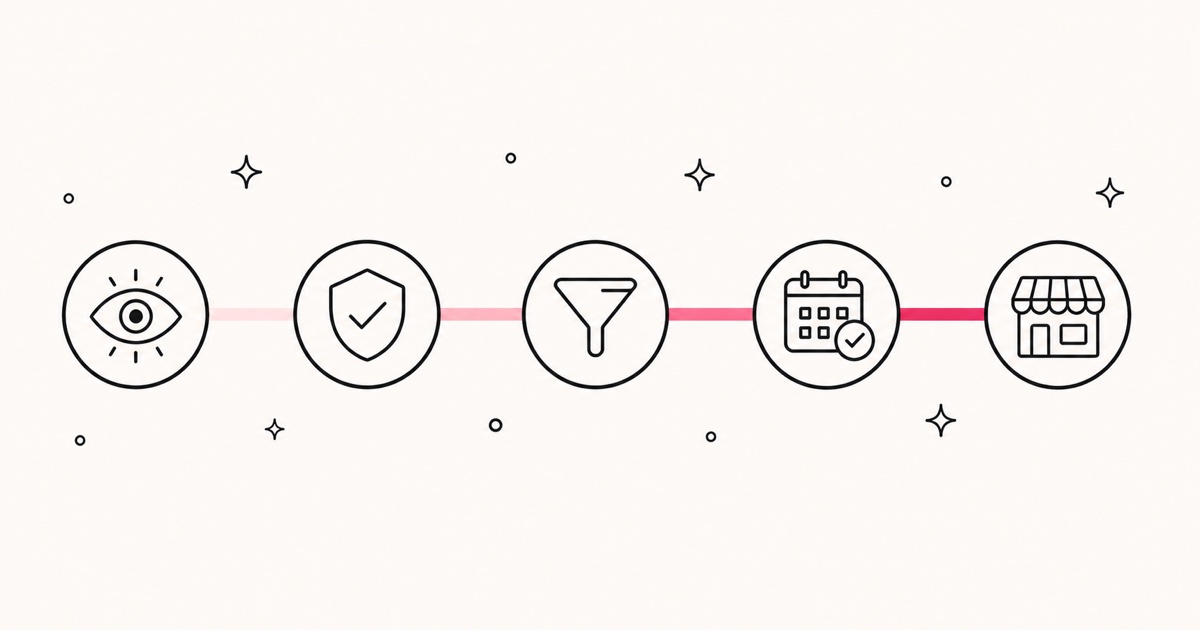
You've seen the phrase all over this site, so let's define it properly. A Results-Driven Content Engine is a repeatable system that produces the content your business needs (social posts, short-form video, blog articles, graphics, email, website content) with every piece designed to move people along one path: Attention → Trust → Leads → Customers.
The key word isn't 'content.' It's 'engine.'
Content vs. an engine
Content is output. An engine is the machine that produces output reliably, month after month, pointed at a destination. The difference shows up everywhere:
- Content asks, 'what should we post?' An engine already knows: it's on the calendar.
- Content hopes something works. An engine measures, learns, and adjusts.
- Content is one person's energy. An engine is a process that survives busy weeks.
- Content makes one asset. An engine turns one idea into ten assets through repurposing.
Here's a simple way to tell which one a business actually has: ask what happens the week the owner is sick, on vacation, or slammed with client work. If content stops, it was never an engine: it was one person's willpower with a content calendar taped on top. An engine is a process other people (or a partner like us) can run without the founder personally producing every piece.
The four stages, in plain English
| Stage | What it does | What to measure |
|---|---|---|
| Attention | Gets the right people to notice you | Reach, impressions, search visibility |
| Trust | Turns visibility into credibility | Return visits, saves, replies, useful engagement |
| Leads | Turns interest into an opportunity | Forms, calls, DMs, email captures |
| Customers | Turns warm opportunities into revenue | Booked calls, closed deals, customer value |
Attention. Get seen by the right people. Short-form video and social content do the heavy lifting here, because that's where eyeballs live. This stage is measured in reach and impressions: necessary, but on its own, worthless. A business that only tracks this stage is the one asking 'why don't views turn into customers,' and the honest answer is: views were never supposed to, on their own.
Trust. Show up consistently with substance. Helpful posts, real expertise, blog articles that answer real questions, a website that doesn't look abandoned. Trust is earned in repetitions, not in one perfect post: a single great video builds less trust than ten decent ones spread over ten weeks, because trust is a pattern-recognition problem for the viewer, not a one-time impression.
Leads. Turn interest into opportunities: calls booked, forms filled, DMs sent, emails captured. This is where most content strategies have a gap, and where an engine deliberately builds bridges. Content that stops at 'like and follow' with no next step is leaving this entire stage to chance.
Customers. The whole point. Leads convert when the trust is already built, which is why the earlier stages matter so much. A lead that arrives with zero trust behind it converts like a cold call. A lead that arrives after weeks of genuinely useful content converts like a warm introduction, because functionally, that's what it is.
What goes into building one
Every engine we build follows the same three moves:
- Understand the business. Goals, customers, and what actually generates revenue. The engine is built around that, not around trends.
- Build the engine. Channels, content types, calendar, repurposing flows, and the path from attention to customers.
- Launch and improve. The engine runs monthly. We watch what performs, double down, and keep tuning.
What a month inside an engine actually looks like
To make this concrete, here's the shape of a typical month once an engine is running:
- Week 1: plan and batch. The month's themes come off the calendar, anchored to what your customers ask and what performed last month. Core assets (usually video) get produced in batches, not one-at-a-time scrambles.
- Week 2: repurpose and load. Each core asset is cut, rewritten, and redesigned into clips, posts, graphics, and an article. Everything is scheduled. The 'what should we post today?' question stops existing.
- Weeks 3–4: publish, engage, capture. Content ships on schedule across channels. Interest gets routed somewhere useful: a booking link, a form, an email list, a DM flow.
- End of month: read the dials. What earned attention, what built trust, what produced leads. Double down on winners, retire the rest, feed the learnings into next month's plan.
Notice what's missing: heroics. No 11pm caption-writing, no panic-posting, no waiting for inspiration. Engines are deliberately unexciting to operate. The excitement is supposed to show up in your pipeline instead.
Engine vs. agency vs. doing it yourself
A traditional agency sells you deliverables: a set number of posts, a campaign, a retainer. A freelancer sells you hours. DIY costs you the most valuable thing you have, which is time you should be spending running the business. An engine is a different purchase: you're buying a system that produces outcomes, where the deliverables are just the moving parts. That's why we measure engines in inquiries and customers, not in post counts.
This distinction matters most when something isn't working. With a deliverables contract, 'we posted the agreed number of times' is contractually a success, even if nothing happened downstream. With an engine, a quiet month is a signal to adjust the system, because the system, not the post count, is what's being managed.
Common mistakes when building your first engine
Too many channels too soon. An engine that runs on one channel beats a sputtering presence on five, expand only after the system runs without heroics. Spreading thin doesn't multiply your reach; it divides your production capacity by the number of channels and calls it a strategy.
Skipping the trust stage. Jumping from attention straight to 'book now' is why ads feel expensive and content feels pushy; trust is the bridge, and it's built with substance, repeated. Businesses that skip this stage usually don't realize they've skipped it: they just notice their cost per lead keeps climbing.
Measuring the wrong dials. If your monthly review is about followers and likes, the engine will optimize for followers and likes. Review inquiries, calls, and customers instead, and the whole machine points itself at revenue. What gets measured is what the engine, and the people running it, will unconsciously chase.
Who needs one
Any small business where customers need to find you, trust you, and choose you: retail, restaurants, contractors, professional services, real estate, consultants, local businesses, growing brands. If word-of-mouth is your only marketing channel, an engine is how you stop leaving growth to chance.
Research Confidence
This article is based on:
- Direct observations from content strategy, website, and growth-system planning
- Multiple small business patterns where content activity was disconnected from lead capture
- Platform behavior patterns around attention, trust, search visibility, and conversion paths
- Hypotheses still being tested around the strongest monthly operating rhythm for small teams
Confidence Level: Normal
FAQ
Is a content engine the same as social media management?
No. Social content is one component. An engine connects social, video, blog, email, and your website into one system aimed at producing customers.
How long does it take to build a content engine?
Setup typically takes the first few weeks: strategy, calendar, and production flows. The engine then runs and improves monthly from there.
What does a content engine cost?
Founding-client pricing starts at $1,500/month for Foundation and $3,000/month for Growth, with Custom pricing for websites, automation, and larger systems.
Can I run a content engine myself?
Yes, with discipline: the system matters more than who runs it. Most owners hand it off because consistency is the hardest part to maintain solo.
What results should I expect from a content engine?
Improved visibility and consistency in month one, with trust and leads compounding over time. Most businesses feel real momentum within 90 days.
Ready to turn attention into customers?
Book a free discovery call and let's map your growth system.
Free Marketing Audit Or book a strategy call