
The Delulu Blog
The Future of Real-Time Translation: How AI Will Understand You Before You Finish Talking

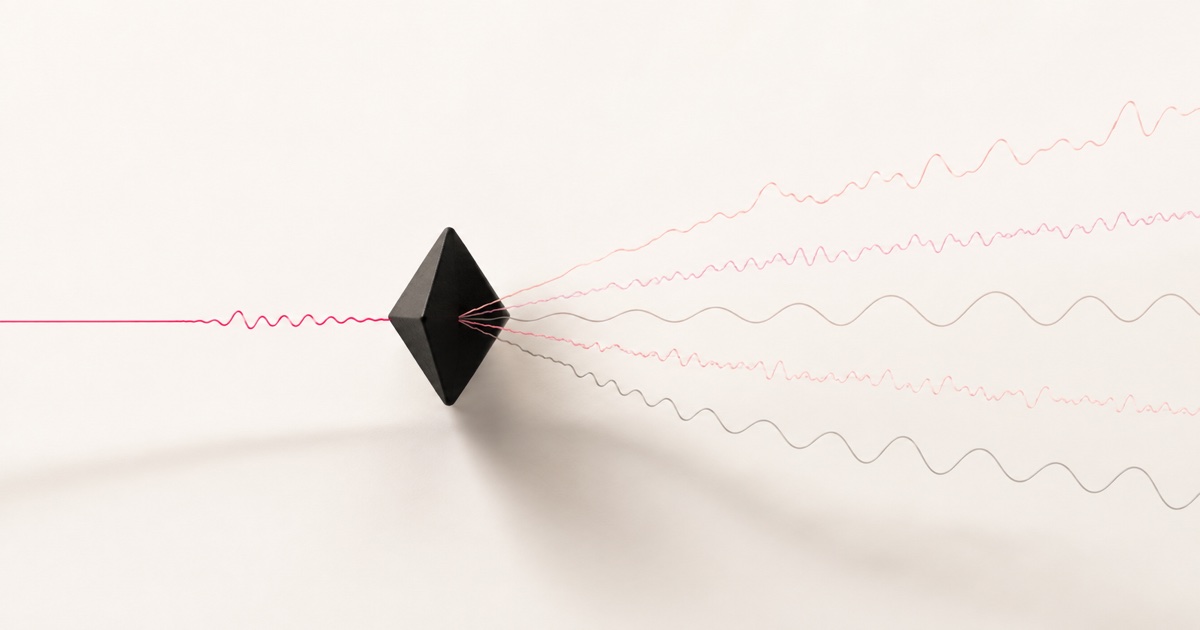
You pick a language. The stream is still in the middle of a sentence. By the time it finishes, you've already heard it: in yours.
That's not how most "live translation" actually works today, even though it's easy to assume it already does. Google Translate feels instant because you're used to it. Live captions on a stream feel real-time because they show up fast. But almost none of what people call "real-time translation" right now is actually fast enough, or smart enough, to keep pace with a live conversation without a lag you'd notice mid-sentence, and none of it is watching a random Twitch stream, YouTube live show, or movie and translating it, live, into whatever language you pick.
That's changing, and the reason it's changing is more specific than "AI is getting better." There's a real pipeline behind every translation you've ever seen, a real reason it's slow, and a real, named research direction closing the gap. Here's the actual breakdown: how it works now, what's different about what's coming, and where the honest limits still are.
What most people think already exists
Ask most people whether real-time AI translation exists, and they'll say yes: pointing at Google Translate's conversation mode, live YouTube captions, or a dubbed Netflix show. All three are real and useful. None of them is what the owner of a livestream, a movie, or a video call actually needs: translation that tracks a live, unscripted, in-progress conversation closely enough that it doesn't feel like reading a delayed transcript.
Conversation-mode translation apps still wait for you to finish a sentence before translating it. Auto-dubbing tools process a finished video, not a live one: YouTube's automatic dubbing feature, Aloud, currently applies to already-uploaded video for eligible Partner Program creators, not to anything happening live, a distinction Slator's coverage of the rollout confirms directly. Live captions are usually same-language transcription, not translation, and even when translated, they inherit the delay of whatever's generating them underneath.
None of this is a criticism of those tools: it's the actual starting point. The gap between "translation exists" and "real-time translation of a live stream, in your language, on demand" is bigger than the marketing around AI translation usually admits.
What's actually happening today: the real pipeline
Most translation you encounter (live captions, conversation apps, most dubbing) runs through the same three-stage pipeline, executed one step at a time:
- Speech recognition (ASR): spoken audio becomes text in the original language.
- Machine translation (MT): that text gets translated into the target language.
- Speech synthesis (TTS): the translated text becomes spoken audio, if the output needs to be spoken at all.
This is called a cascaded pipeline, and it's the dominant architecture because each stage can be built, trained, and improved separately. OpenAI's Whisper is the ASR backbone behind a large share of current systems: it transcribes and translates across 99-plus languages, running roughly 5–6% word error rate on English audio, with each newer version cutting errors further (Whisper large-v3 reduces errors 10–20% versus large-v2 across a wide range of languages).
The problem with cascading three stages is that the delays stack. Each stage has to mostly finish before the next one can start, and every stage adds its own processing time on top of the last: Google Research's own work on real-time speech-to-speech translation points at exactly this stacking effect as the core latency problem, not any one stage being slow, but three stages waiting on each other.
Here's roughly where that leaves things as of 2026, compared against the one benchmark that actually matters: a live human being talking:
| System | Typical latency | What it's built for |
|---|---|---|
| Professional human interpreter | 2–3 seconds, deliberate | Live conferences, broadcasts: the interpreter chooses this delay to preserve accuracy |
| Gradium's s2s-translate model | ~3.0 seconds average | Real-time speech-to-speech translation, 20 language pairs |
| GPT-realtime-translate | ~3.6 seconds average | General-purpose real-time voice translation |
| Gemini 3.5 Live Translate | ~2.9 seconds average | General-purpose real-time voice translation |
| ElevenLabs dubbing | Up to ~20 seconds acceptable | Pre-recorded video/audio dubbing, not live: latency tolerance is much looser here because nobody's watching it happen live |
That human baseline matters more than it looks. Professional simultaneous interpreters run a deliberate 2–3 second delay behind the speaker (called the "ear-voice span") on purpose, because research on simultaneous interpretation confirms it's needed to capture a full thought before rendering it, not a limitation to be engineered away. It's also physically unsustainable: the cognitive load is intense enough that interpreters rotate every 15–30 minutes, because accuracy measurably declines past that point. AI doesn't get tired, but it's currently landing in almost exactly the same latency range a human chooses on purpose, which tells you something: 2–3 seconds isn't just a technology limit, it's close to the actual floor for translating a full thought accurately. Getting meaningfully faster than that requires a different approach, not just a faster version of the same one, which is exactly what's changing.
Separately, first-chunk latency thresholds matter for how a delay actually feels: under roughly 800 milliseconds feels live; 800ms–1.5 seconds still works for a lecture or keynote; past about 2 seconds, people start talking over the interpretation and the exchange breaks down. Most of today's fastest systems are still on the wrong side of that second threshold for genuinely live, two-way conversation: fine for watching a stream, not yet fine for talking back through it.
The underlying mechanism that actually changes the math
Shaving milliseconds off each stage of a cascaded pipeline gets you incremental gains. The bigger shift is architectural: instead of waiting for a complete sentence and then translating it, newer systems start producing target-language output while the source sentence is still being spoken, predicting how it's likely to continue, based on grammar and context, and revising if the prediction turns out wrong.
This isn't a hand-wavy idea. It's a specific, published research direction called simultaneous or streaming translation, and one of its clearest formulations is a technique called prefix-to-prefix decoding with implicit anticipation: described in the STACL research paper, which showed that a translation model can start generating a target sentence from only a partial ("prefix") view of the source sentence, anticipating words that haven't been said yet, instead of waiting for the full stop.
That matters most for language pairs with different word order. If a source language puts the verb at the end of a sentence and the target language wants it near the front, a system that waits for the whole sentence has no choice but to wait: the verb hasn't arrived yet. A predictive system uses grammatical structure and context to make a confident guess about where the sentence is headed and start translating anyway, correcting course if it guessed wrong. That's the literal mechanism behind "predict speech before it's finished", not a metaphor, an actual decoding strategy with a name and a paper behind it.
Meta has already shipped a production version of this idea. SeamlessStreaming, part of Meta's Seamless research family, uses a mechanism called EMMA (Efficient Monotonic Multihead Attention) specifically to "generate low-latency target translations without waiting for complete source utterances." It's the first system of its kind built to handle simultaneous speech-to-speech and speech-to-text translation across multiple source and target languages at once, rather than one hard-coded pair.
There's a second front closing the gap too: getting translation off a server round-trip entirely. SimulTron, research into on-device simultaneous speech-to-speech translation, is aimed at running this kind of model directly on a phone or a pair of earbuds, removing network latency as a variable altogether, which matters because right now, even a fast model can lose its speed advantage to the time it takes to send audio to a server and get a response back.
Where this is already showing up
None of this is purely theoretical. It's already shipping, in narrow but real forms:
- Apple's Live Translation, announced September 2025 for AirPods Pro 3, AirPods Pro 2, and AirPods 4 with Active Noise Cancellation, translates an in-person spoken conversation and displays it on the paired iPhone: hands-free, requires Apple Intelligence and iOS 26 or later.
- YouTube's Aloud auto-dubbing already translates and dubs uploaded video into eight languages for eligible creators: the clearest sign that the demand for this exists at consumer scale, even though it doesn't reach live streams yet.
- ElevenLabs' dubbing pipeline translates across 90-plus languages while preserving the original speaker's voice, emotion, and timing: a meaningfully different (and harder) problem than translating text, because tone and delivery have to survive the translation too.
- Enterprise live-interpretation vendors (DeepL Voice, KUDO, Interprefy, and Meta's own SeamlessM4T v2) already serve real conferences and events with AI-assisted live interpretation, which is the closest existing proof that "live, spoken, real-time translation" is workable outside a lab, today, at least for a paying, structured audience.
What's missing is the version described at the top of this article: picking a language on an arbitrary livestream, movie, or piece of short-form content, with no special hardware, no enterprise contract, and no pre-processing, and having it just work. That version doesn't exist yet. But every piece of it (the predictive decoding, the on-device latency work, the voice-preserving synthesis, the consumer-facing product instincts) already does, separately.
What this means if you make or distribute content
This isn't just a translation story: it's a distribution story, and it applies directly to anyone building content as a system rather than a one-off. The core idea Design Delulu keeps coming back to (systems outlast one-off content) has a language-specific version: content whose language layer is cleanly separable from the content itself is positioned to pick up new-language reach for close to free as this technology lands. Content that's tangled up with one language at the production level (baked-in on-screen text, jokes that only land in translation with real editorial rework, audio mixed in a way that makes isolating the voice hard) isn't.
That's a production decision available right now, well before real-time translation is a consumer default: keep spoken content and visual/text content as separable layers, and the language layer becomes something you add later instead of something you have to rebuild. It's the same "build the durable system, not the one-off asset" logic Design Delulu applies to content generally, applied here to the specific axis of language.
It also reframes what a "global audience" actually requires. Right now, reaching a non-English audience live (the same viewing context MultiStream.cc was built for) usually means a translator, a dub team, or simply not reaching that audience live at all. The direction this research is headed doesn't eliminate that cost today. It does mean the cost is falling faster than most content plans currently assume.
Questions still being tested
Being honest about this technology means naming what it doesn't solve yet:
- Idiom, humor, and tone are harder to predict correctly than grammar. Anticipatory decoding is good at guessing where a sentence is grammatically headed. It's much less reliable at guessing when a phrase is about to become a joke, a sarcastic aside, or a culturally specific reference: the exact places where a wrong prediction is most embarrassing, not just slightly off.
- Live, unscripted events are harder than a keynote. Crowd noise, cross-talk, slang, and multiple speakers talking over each other stress every one of these systems far harder than a single person reading a prepared talk, which is closer to what most published benchmarks actually measure.
- Cost and scale at true live-broadcast volume isn't solved. Enterprise interpretation vendors serve structured events with a fixed audience. Nobody has published pricing or infrastructure for running this continuously across an unpredictable, potentially huge live-stream audience.
- "Predicted, then corrected" still means occasionally wrong. A system that starts translating before the sentence ends will sometimes guess wrong and have to revise, which is a genuinely different failure mode than a slow-but-accurate cascaded system, and one that hasn't been fully stress-tested in the wild.
Research Confidence
This article is based on:
- Evidence: named, dated, retrievable sources for every current-state technical claim: official research publications from Meta and Google, OpenAI's own model documentation, Apple's own product announcement, and 2026 industry latency benchmarks
- Evidence: the specific predictive/anticipatory-translation mechanism (prefix-to-prefix decoding) is real, published, peer-reviewed research that already ships in production (Meta's EMMA-based SeamlessStreaming), not a speculative extrapolation
- Heuristic: the business-application argument (separating content from its language packaging) is Design Delulu's own reasoned judgment, not itself a cited finding
- Hypothesis: the article's actual prediction, that falling latency and predictive decoding converge into ordinary, on-demand, pick-a-language live translation, is stated as a forward-looking argument built from real current evidence, not a claimed certainty or a dated forecast
Confidence Level: Normal
FAQ
How does real-time AI translation actually work right now?
Most of it runs a three-stage "cascaded" pipeline: speech recognition turns spoken audio into text, machine translation converts that text into the target language, and speech synthesis turns the translation back into spoken audio if needed. Each stage mostly waits for the one before it to finish, which is the main reason current systems run a few seconds behind a live speaker.
What makes predictive translation different from just a faster translation lag?
A faster cascaded pipeline is still waiting for each stage to finish before starting the next one: it's the same process, sped up. Predictive (streaming) translation changes the process itself: it starts producing translated output while the original sentence is still being spoken, using grammar and context to anticipate how the sentence will likely end, and correcting if the prediction turns out wrong.
Can I already watch a livestream translated into my language in real time?
Not as a general, pick-any-stream consumer feature. Enterprise live-interpretation tools already do this for structured events like conferences, and Apple's Live Translation handles in-person conversations. Auto-dubbing tools like YouTube's Aloud translate uploaded video, not live streams. The pieces exist; the "any stream, any language, on demand" version doesn't yet.
Will AI translation replace human interpreters?
Not for the parts that require judgment: tone, cultural context, and knowing when a literal translation would land wrong. What's changing is the mechanical speed of translation, not the judgment layer underneath it. Professional interpreters already operate close to the physical floor for translating a full thought accurately (a deliberate 2-3 second delay); AI is currently landing in roughly that same range, not meaningfully beating it yet.
What's actually still stopping instant, universal translation from existing today?
Three things: idiom and tone are harder to predict correctly than grammar, live unscripted events (crowd noise, cross-talk, multiple speakers) are harder than a scripted keynote, and nobody has published pricing or infrastructure for running this continuously at real live-broadcast scale. The underlying research is real; the consumer packaging isn't finished.
Ready to turn attention into customers?
Book a free discovery call and let's map your growth system.
Free Marketing Audit Or book a strategy call